The Questions We're Bringing to the Table
A Passover Haggadah supplement — and an invitation that goes beyond any one tradition

This week, the Jerusalem Youth Chorus held two intensive days of rehearsal and dialogue in Jerusalem, part of it in bomb shelters. We didn’t know if we’d be able to gather at all, but when we asked the singers’ parents what to do, as we often do when faced with unprecedented dilemmas, they told us how important it was to their kids to keep meeting, face to face, particularly now.
Regional war continues to escalate. Settler violence in the West Bank surged over the Eid al-Fitr holiday. Families in East Jerusalem were forced from their homes. Our singers — Israeli and Palestinian — showed up anyway. They sang. They grappled. They stayed. Because they know the only way to a different future is to walk there together.
Next week begins Passover, the Jewish holiday of liberation. At the heart of Passover is the Seder — a ritual meal built around telling a story: once we were slaves, and now we are free. The tradition demands that every person at the table see themselves as if they personally came out of Egypt, walking through the Red Sea to freedom. It’s not a history lesson. It’s not just a lesson in empathy. It’s a provocation. What enslaves you now? What sea are you standing in front of? And will you step in?
I’ve been thinking about those questions a lot, as someone who has spent fourteen years watching teenagers in Jerusalem answer these questions every week with their feet, with their hearts, and with their voices. Israeli and Palestinian kids who walk into a room together and choose to sing, even when their communities tell them it’s a betrayal. They don’t wait for the water to part. They walk in.
So I wrote a Haggadah supplement — a set of readings, discussion questions, and songs designed to be used at Seder tables alongside whatever Haggadah families already use. It’s called “Step Into the Water,” and it draws on themes from the sermon I gave earlier this year at the synagogue where I grew up — where I managed to ask some pretty challenging questions about whose stories are told and whose freedom matters — and kept hearts open to answer.
You can download the full supplement here.
Now — I want to say something about why I’m sharing this here, where my readers include people of many faiths and backgrounds, and where views on Israel-Palestine diverge sharply.
I’m sharing it because the questions in this supplement are more than just Jewish questions. They’re human ones.
What narrow places are you still living in — narrow visions of who belongs, narrow empathy that lets you care selectively, narrow curiosity that keeps you from asking hard things?
Whose story is the missing piece you haven’t yet been willing to hold?
What is the water you’ve been standing in front of? What would it take to put one foot in?
These are questions for everyone at every table — Seder tables, Iftar tables, dinner tables, conference tables. The particular ritual container is Jewish, but the invitation is universal.
I also want to name what the supplement does not do: it does not tell you what to think. It doesn’t flatten what’s happening in Israel-Palestine into a simple narrative. It asks you to sit with hard truths, to hold stories that make you uncomfortable, and to stay in the room. That’s what our singers do every week. It’s why I write this Substack. And it’s what I think all of us need practice doing right now.
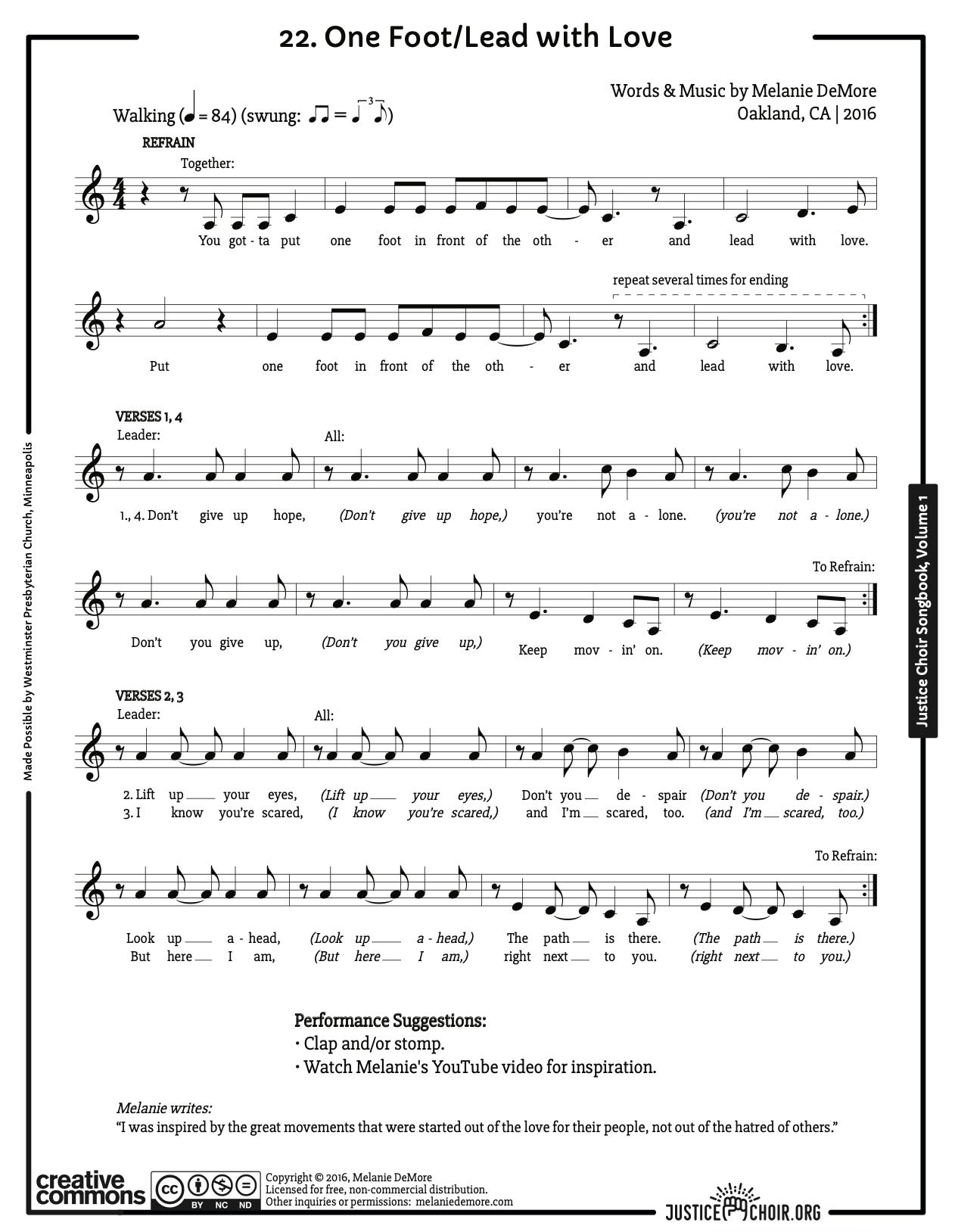
The supplement includes readings mapped to moments in the Seder, a set of discussion questions, and, of course, an invitation to sing together (specifically including “One Foot / Lead With Love” by the brilliant Melanie DeMore — listen here — and the creative commons sheet music so anyone can teach it.)
If you’re hosting or attending a Seder, I hope you’ll bring it. If you’re not, I hope the questions find you wherever you are.
And if you want to support the teenagers who inspired it — the ones who keep showing up in Jerusalem, who keep singing across every line of division their world has drawn — you can do that at jerusalemyouthchorus.org/involved.
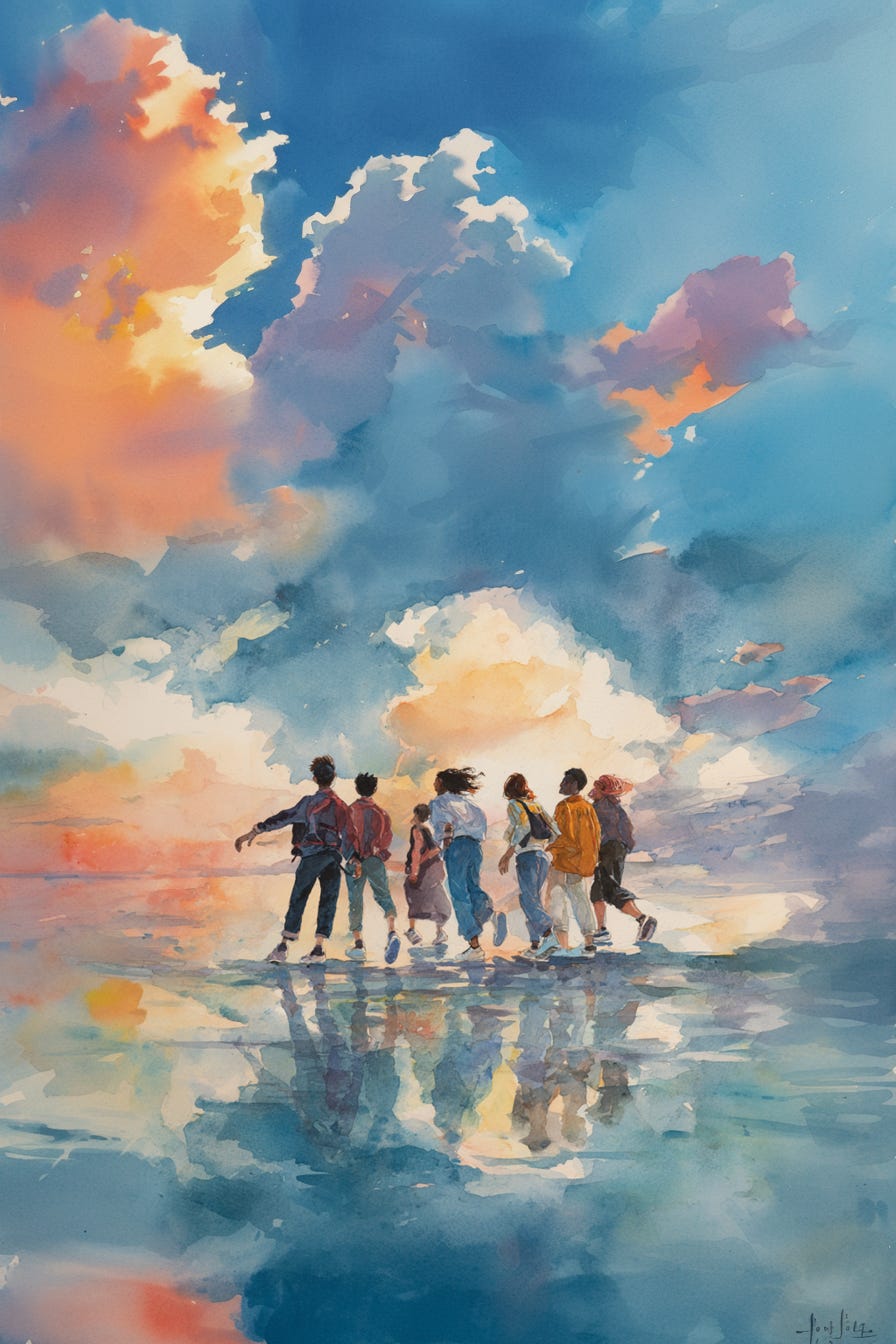
The sea is still in front of us. But I’ve watched kids walk into the deepest waters, week after week, for fourteen years, and begin to chart a way through. If they can do it, I believe we can too.
One foot in front of the other. Lead with love.
—Micah
ps: If this supplement leads to meaningful reflection, conversation, or song in your gathering, I’d love to hear about it.
Micah, your Passover supplement is beautiful and wise, perfect for participants of all religions, and a wonderful way to make the Passover message a universal one. Thank you so much!
As a frame drum player, I’m also happy that you called Miriam’s instrument a drum (Hebrew tof), rather than a timbrel or tambourine, since archeological evidence shows that Miriam and her fellow musicians did play a frame drum without jingles.
Beautiful reflections, Micah. Thank you for all that you do 💜